
The Hidden Clothing Challenges Lower Limb Amputees Face
When people think about life as a lower limb amputee, they usually think about the big, visible milestones such as learning to walk, mastering a prosthetic, returning to sports and work. What rarely makes the conversation is something every single person does every day, getting dressed.
Clothing might seem like a small, inconsequential detail compared to mobility or pain management, but for some amputees it can be a daily issue. Wearing a prosthetic limb can mean that some clothes are not comfortable, safe, or accessible enough to wear. From trouser legs that won’t sit right to finding a pair of shoes that fit, the wardrobe challenges are real, persistent, and except for a few clothing brands, often overlooked entirely. This blog breaks down the most common problems lower limb amputees face and potential solutions that could help to alleviate them.
The Problems
Pant leg fit - a prosthetic limb is often bulkier or shaped differently especially around the socket or knee joint. Sockets and liners can create added bulk around the residual limb making off-the-shelf trousers feel tight and restrictive.
Getting dressed – pulling trousers over a prosthetic foot or socket can be surprisingly difficult. Rigid sockets, unflexing prosthetic feet, and hard edges make the simple act of dressing slower and more awkward than most people realise.
Wear and tear – friction between the prosthesis and fabric, especially around the knee joint or ankle, can wear the fabric out in the trouser leg much faster than you would expect. Many amputees find themselves replacing pants much more often than they would like.
Access to the socket or liner – prosthetic sockets sometimes need adjusting, checking, or removing during the day. Clothing that doesn’t allow quick, discreet access turns into a minor adjustment, into a major inconvenience. For this reason, shorts tend to be a popular choice of wear all year round.
Shoe mismatches – matching shoe size, shape and heel height between the prosthetic foot and the other foot is a constant challenge. Some prosthetic feet are only compatible with certain shoe types, which limits the ability to switch between shoes styles like, heels, sandals, and boots.
Skin sensitivity – the residual limb changes size throughout the day due to swelling. Clothes that fit comfortably in the morning can feel tight and start to rub as the day progresses.
Weather and sweating – prosthetic sockets can trap heat, making some trousers, made from synthetic materials, uncomfortable especially in warm weather.
Self-consciousness – the decision about what to wear can also depend on how the person feels about showing their residual limb or prosthesis on the day.
The Solutions
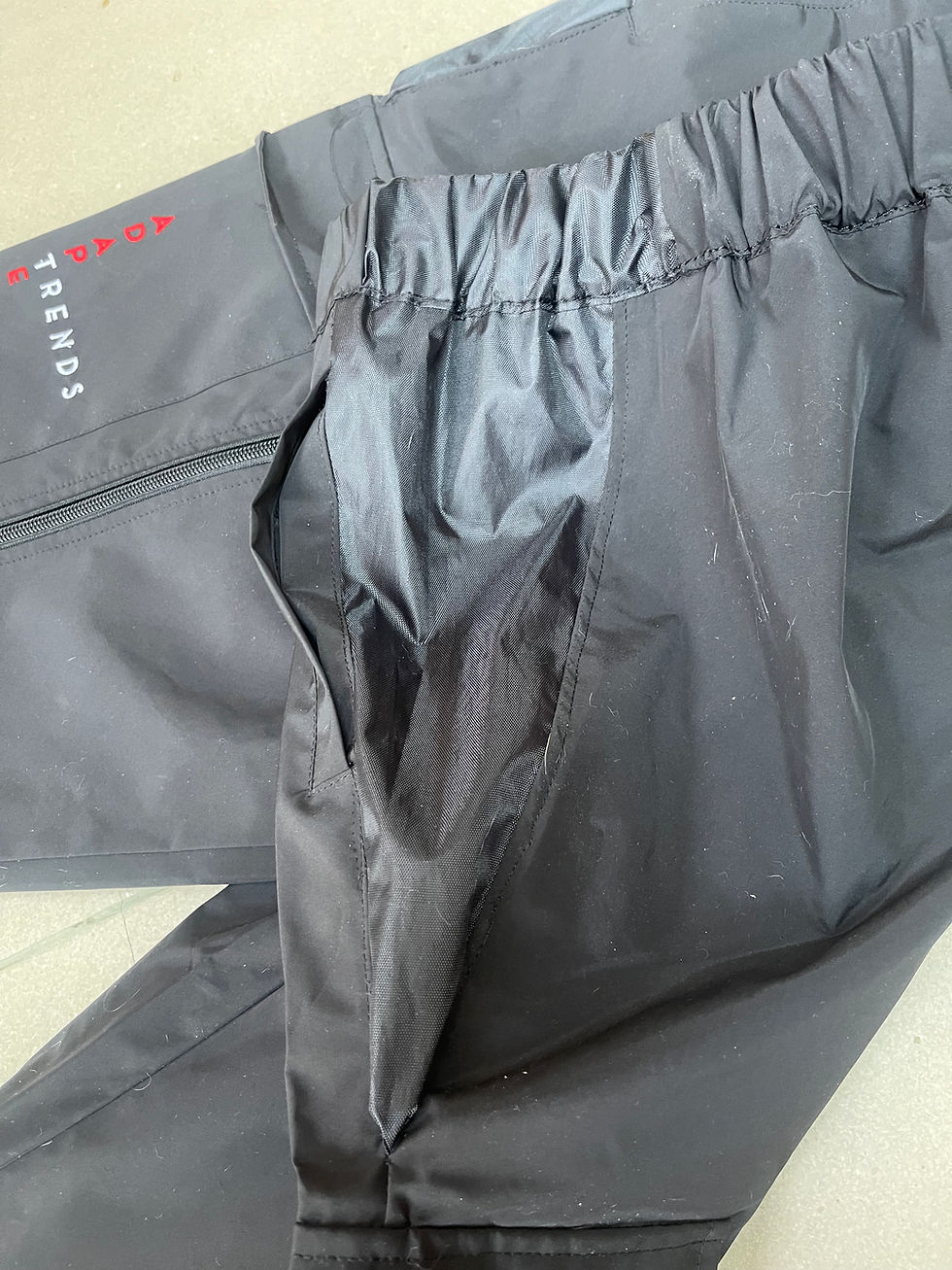
Modified trouser legs –wide-cut trouser designs are better as these do not feel so tight and restrictive. Zips or Velcro, if not already incorporated can be added to the side seams to allow for easy access to the prosthesis.

These can be a visible feature, like our black cargo trousers with red contrasting zips, or more discreet according to personal preference.

Stretch and technical fabrics – breathable fabrics, such as cotton and bamboo, can reduce sweating, although stretchy materials reduce friction against the socket and can cope with heat better. Polyester and nylon fabrics, as well as being stretchy, are also moisture-wicking fabrics that pull sweat away from the skin to the outer surface of the material so it can dry faster.
Reinforced fabric patches – sewing reinforcement patches into high-friction areas, like the knee and ankle, prevent the fabric wearing out and can extend the life of trousers.
Prosthetic covers and skins – cosmetic covers that mimic skin tone, or decorative sleeves, allow amputees to wear shorts or skirts confidently, with or without hiding the hardware. In addition, clothes and accessories can be chosen to compliment the prosthetic limb when dressing for the day.
Compression garments – compression garments help manage volume fluctuation in the residual limb, ensuring trousers and clothes fit more consistently throughout the day.
Shoe solutions – many prosthetic feet now support interchangeable shoe attachments. Previously, amputees have had to buy two pairs of shoes in assorted sizes or use inserts to match heel height between shoes. However, some brands, such as Adidas and Schuh, offer a dedicated single-shoe service at 50% of the cost of a full pair. In addition, Zalando, Nike, Friendly Shoes and Billy Footwear offer shoes designed for people with disabilities or for those that have difficulty putting on and taking off shoes, with side zips to help slip them on quickly ands easily.
Closing Thoughts
As discussed in this blog clothing challenges for lower limb amputees are very real but there are solutions whether in the form of modifying existing clothing or buying adaptive clothing. Working with a tailor can transform favourite clothing pieces into more accessible garments without changing their appearance too much. If possible altering existing store-bought clothes is more environmentally friendly and is more economical. Trouser suits can be altered and made into short suits very easily or Velcro/zips inserted into the side seam in trousers if preferred.

However adaptive clothing does have some advantages as they are specifically designed around accessibility, comfort, and ease of dressing. These features are integrated into the design, reducing the need for alterations.

There are an increasing number of people and brands that now promote inclusivity and sell adaptive wear. As well as specific brands designing solely adaptive wear some bigger mainstream brands are now offering an adaptive range such as Primark, Zalando, Nike, Adidas, and Tommy Hilfiger. The fashion industry still has a long way to go to include people with disabilities in fashion trends. The future is looking brighter with the potential to design innovative clothes using clever fabrics that can cater to many different body types, leading to a truly inclusive adaptive fashion fit for all bodies.


Comments